Adult Vaccinations

Adult Vaccinations

Vaccinations aren’t just for children — they play an essential role in protecting adults from serious illness throughout life. The immunity we build in childhood can fade over time, and certain infections become more dangerous as we get older or if we develop long‑term health conditions. Staying up to date with adult vaccinations is one of the safest and most effective ways to protect yourself and those around you. 

Why Vaccination Matters for Adults

Vaccines are the most effective way to prevent many infectious diseases. They protect individuals, families, and the wider community by reducing the spread of illnesses — including those that can lead to hospitalisation or long‑term complications. 

Today, diseases such as smallpox, polio, and tetanus are either eliminated or extremely rare in the UK, thanks to widespread vaccination. Without continued vaccination, these infections could return. 

How Vaccines Keep You Safe

NHS vaccines:

  • Help protect against serious and potentially deadly diseases
  • Protect those around you, especially people who are vulnerable or unable to have vaccines
  • Are rigorously tested for safety before being introduced and continually monitored afterwards
  • May cause mild side effects, such as a sore arm or feeling a bit unwell for 1–3 days 

All current evidence shows that getting vaccinated is far safer than not getting vaccinated. 

Common Misconceptions About Adult Vaccines

Vaccines do not:

  • Overload or weaken the immune system
  • Contain harmful ingredients
  • Contain mercury (thiomersal)
  • Cause autism — there is no evidence of any link 

It is completely safe for adults to receive several vaccines during the same appointment if needed. 

Which Vaccinations Are Recommended for Adults?

Most vaccines are given in childhood, but adults may still need important routine and seasonal vaccines as they reach certain ages or develop particular risk factors. 

1. Routine Adult Vaccinations

These are offered when you reach specific ages:

  • Shingles vaccine

    • Offered at age 65
    • Also offered to anyone aged 70–79 who missed it earlier
    • Also given to adults aged 18+ with severe immunosuppression
  • Pneumococcal vaccine

    • For adults aged 65+
    • Also for adults at higher risk of becoming seriously ill
    • Protects against pneumonia, sepsis, and meningitis 
  • RSV vaccine

    • For adults aged 75–79
    • Also offered to pregnant women
    • Protects against respiratory syncytial virus, which can cause serious illness 

2. Seasonal Vaccinations

Certain vaccines are offered every year:

  • Flu vaccine

    • For people aged 65+
    • Pregnant women
    • People with long‑term health conditions
    • Carers and those living with someone who is immunosuppressed 
  • COVID‑19 seasonal vaccine

    • For adults aged 75+
    • People with severe immunosuppression
    • Care‑home residents 

Your eligibility may change over time — our team can advise.

Why Keeping Up to Date Is Important

If people stop having vaccines, diseases that are now rare could quickly return. This has happened in other countries where falls in vaccination uptake have led to outbreaks of measles and other preventable illnesses. 

By staying vaccinated, you are helping protect:

  • Yourself
  • Older adults
  • People with weakened immune systems
  • Pregnant women
  • Newborn babies

Are Adult Vaccines Safe?

Yes. Vaccines go through rigorous safety testing before they are approved and continue to be monitored for side effects on an ongoing basis. Mild side effects are common and short‑lived. Serious side effects are extremely rare. 

Always get vaccine information from trusted sources such as the NHS or the WHO — online misinformation is common and can put people at risk. 

How to Get Your Vaccinations

You can book your vaccine through:

  • The GP practice
  • Local pharmacies offering NHS vaccinations
  • Seasonal vaccination clinics (flu and COVID‑19)

If you’re unsure which vaccines you need, our nursing team can review your record and advise you.


information

Vaccinations in Pregnancy

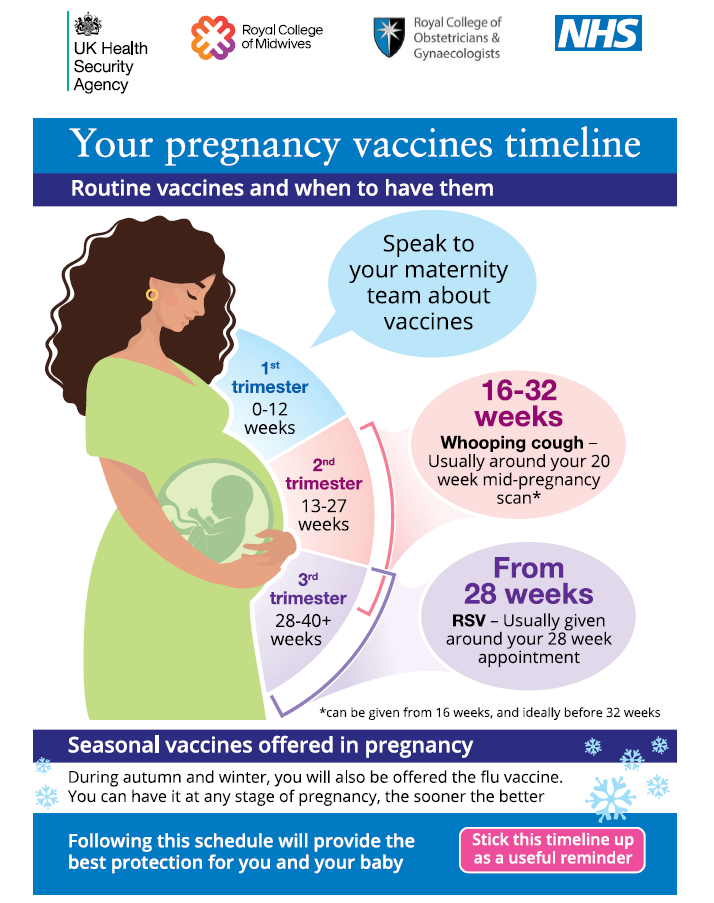
During pregnancy, a few key vaccinations are recommended to help protect both you and your baby from serious infections. Pregnancy naturally weakens the immune system, which means illnesses such as flu or whooping cough can be more severe and may lead to complications. 

Which vaccines are recommended?

  • Flu vaccine – Safe at any stage of pregnancy. It helps protect you from flu‑related complications and also provides some protection to your baby after birth. 
  • Whooping cough vaccine – Usually offered from 20 weeks, but can be given from 16 weeks. It helps your body produce antibodies that pass to your baby, protecting them until they can receive their own vaccinations at 8 weeks old. 
  • RSV vaccine – Offered around the 28‑week antenatal appointment. It helps protect your baby from severe RSV infections during the first months of life. 

Why these vaccines matter

These vaccinations help prevent infections that can cause serious illness in young babies, such as pneumonia, bronchiolitis, and whooping cough, which often require hospital treatment. Getting vaccinated at the recommended time ensures the best protection for your baby through the antibodies you pass on during pregnancy. 

Are they safe?

Yes. The recommended vaccines for pregnancy do not contain live viruses, so they cannot infect you or your baby. Some other vaccines (such as MMR or yellow fever) may not be suitable in pregnancy, so always speak to your midwife or GP if you have questions. 

Pregnancy Vaccination – Frequently Asked Questions (FAQ)

1. Why are vaccinations recommended during pregnancy?

During pregnancy, your immune system naturally weakens, which means infections like flu can be more severe and lead to complications. Vaccines help protect both you and your baby from serious illnesses. 


2. Are vaccines safe during pregnancy?

Yes. Recommended pregnancy vaccines, such as flu, whooping cough, and RSV, do not contain live viruses, meaning they cannot infect you or your baby. Safety depends on the type of vaccine, so always follow NHS guidance. 


3. Which vaccines should I have during pregnancy?

The NHS recommends several important vaccines during pregnancy:

  • Flu vaccine – safe at any stage; protects you from flu complications and your baby for the first few months of life. 
  • Whooping cough (pertussis) vaccine – offered at 20 weeks (can be given from 16 weeks); protects your baby until they can be vaccinated at 8 weeks old. 
  • RSV vaccine – offered from around 28 weeks to protect your baby from severe RSV in the first 6 months. 

4. Why is the flu vaccine important during pregnancy?

Pregnant women are more likely to be admitted to hospital with flu complications, such as pneumonia. The flu vaccine makes you less likely to catch flu, and if you do, it’s less likely to be severe. 


5. Why is the whooping cough vaccine important?

Whooping cough can be very serious for young babies, often requiring hospital care. When you're vaccinated in pregnancy, you pass antibodies to your baby, giving them protection until their first vaccine at 8 weeks. 


6. What does the RSV vaccine protect against?

RSV is a common virus that can cause bronchiolitis and pneumonia in babies. Getting the RSV vaccine from 28 weeks helps protect your baby from severe RSV during the early months of life. 


7. Can I get more than one vaccine at the same time?

Yes. It is safe to have more than one recommended pregnancy vaccine during the same appointment if needed. 


8. Are there any vaccines I should avoid during pregnancy?

Some vaccines, such as MMR and yellow fever, may not be suitable during pregnancy due to potential risks. Always discuss these with your midwife or GP before receiving them. 


9. What if I missed a recommended pregnancy vaccine?

You should try to have each vaccine at the recommended time for the best protection, but you can still receive the whooping cough or RSV vaccine later in pregnancy. If you think you’ve missed one, speak to your midwife or GP. 


10. How do these vaccines protect my baby?

After vaccination, your body produces antibodies that cross the placenta to your baby. These antibodies provide early protection from birth until your baby can have their own vaccines. 


Page last reviewed: 23 March 2026
Page created: 19 March 2026